Food and nourishment
Ask a qualified provider or dietitian how familiar foods, meal timing, portions, and personal preferences can fit your care plan. Avoid extreme diets or major food changes without professional guidance.
Gbokoniyi Community Care · Diabetes Programs
Practical guidance for adults living with type 2 diabetes and their families.
What can I eat? How do I fit blood sugar checks into my day? What should I ask at my next appointment? The guide below gives adults living with type 2 diabetes and their families practical ways to start these conversations.
Rest-In-Hope Healthcare Services, part of Gbokoniyi Community Care, is developing an in-person Diabetes Self-Management Education and Support (DSMES) program in Abeokuta. Check back here for program updates.
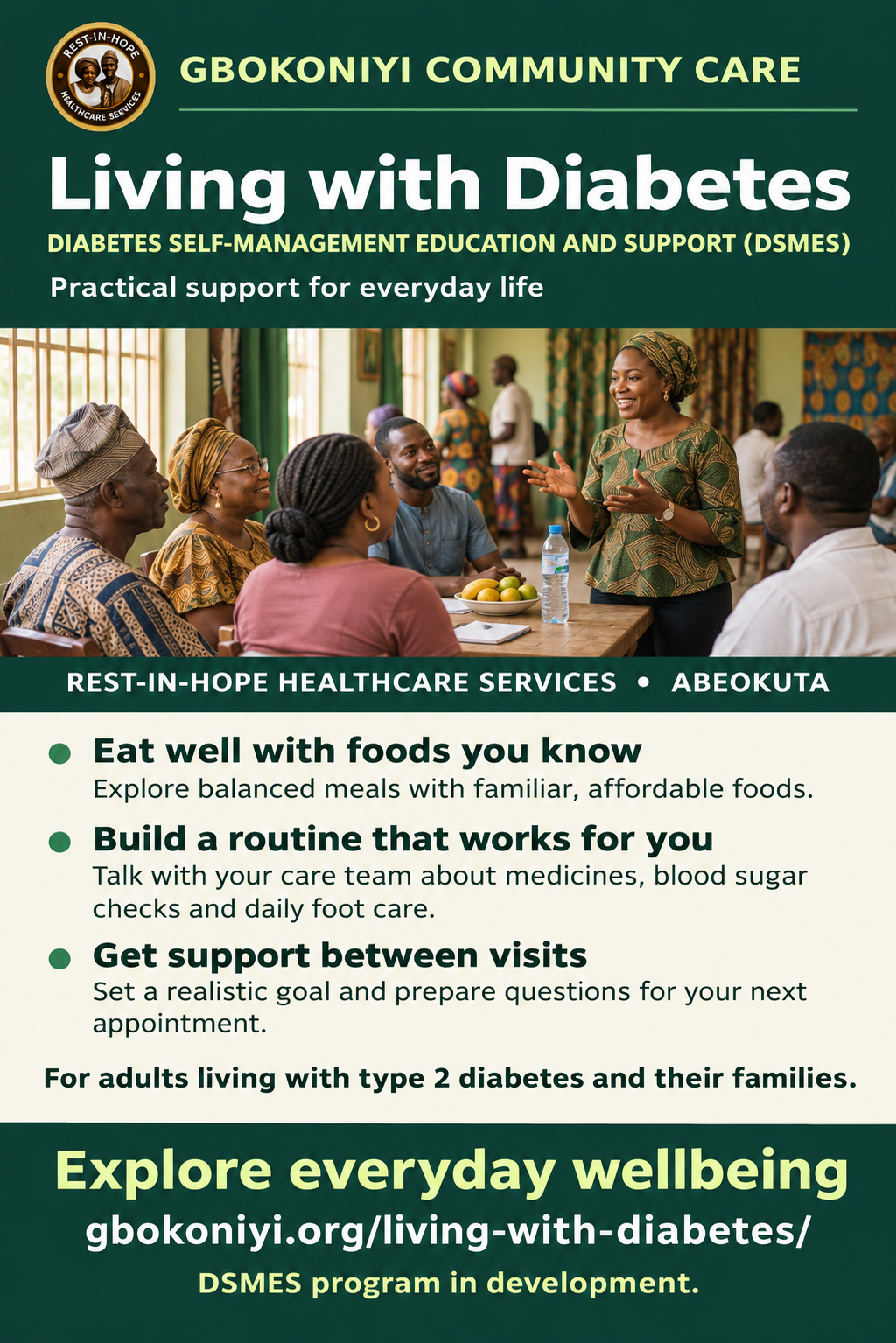
These general topics can support conversations with your healthcare team. Follow the personalized care plan provided by your clinician.
Ask a qualified provider or dietitian how familiar foods, meal timing, portions, and personal preferences can fit your care plan. Avoid extreme diets or major food changes without professional guidance.
Discuss safe, enjoyable activity that fits your abilities and health needs. A care provider can advise if you have concerns about beginning or changing exercise.
Use medicines only as prescribed and ask your healthcare professional how and when to monitor blood glucose, if monitoring is part of your care plan. Never change a dose on your own.
Keep recommended appointments and bring a list of questions, medicines, and concerns. Ask your care team which screenings and follow-up visits are appropriate for you.
Ask your provider about routine foot checks and any new pain, wounds, vision changes, or other symptoms. Seek timely professional assessment for health concerns.
Living with a long-term condition can feel challenging. Consider sharing concerns with trusted family, community support, or a qualified mental health professional.
Contact a qualified healthcare provider when you have questions about symptoms, blood glucose results, medicines, or changes in your health. For severe or rapidly worsening symptoms, seek urgent or emergency medical care in your area.
This page provides general education only. It does not diagnose, treat, or replace individualized medical advice. Do not start, stop, or change medication based on website content.
Learn about diabetes prevention and healthy living education in Abeokuta.
Diabetes Prevention & Healthy LivingFor individual medical care, please consult an appropriately qualified healthcare provider.